
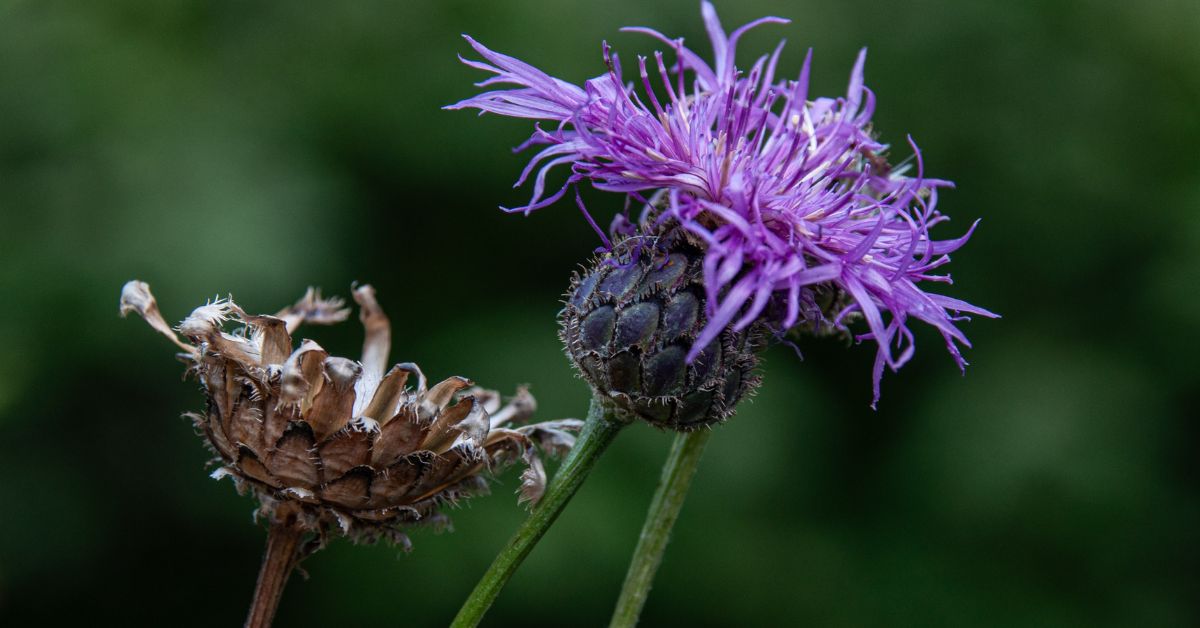
Russian knapweed (Acroptilon repens) is a deep-rooted perennial that spreads primarily
through an extensive root system. It forms dense monocultures and produces allelopathic
chemicals that suppress nearby plants.
It is toxic to horses and can severely degrade pasture quality.
Management Strategies
Chemical Control (Most Effective)
- Timing:
- Bud to early bloom stage
- Fall regrowth
- Recommended Active Ingredients:
- Aminopyralid (Milestone)
- Clopyralid
- Picloram (Tordon – restricted use)
Mechanical Methods
- Mowing:
Provides suppression but does not control roots. - Tillage:
Often ineffective alone and may spread roots.
Cultural & Preventative Measures
- Establish competitive perennial grasses
- Avoid soil disturbance unless reseeding
- Prevent spread via contaminated hay or equipment
- Well managed irrigation helps reduce Russian knapweed stands
Biological Control
- Limited availability; research ongoing.
Key Timing Reminder
Repeated herbicide applications over multiple years are required for control.
Always read and follow herbicide label instructions before application.
Need Assistance?
For more information or help with weed management:
- Contact: Kevin
- Phone: (970) 799-2473
- Email: kevin@mallowlandandpest.com

Leave a Reply